Gigabyte Servers: Powering Modern Workloads with Performance, Efficiency, and Scalability
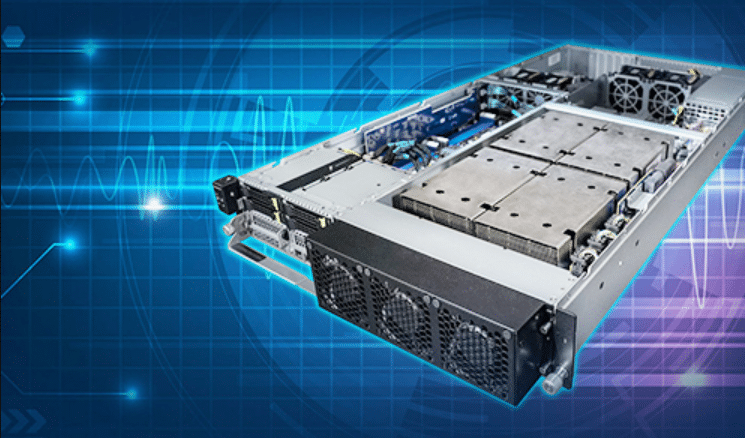
In an era where data volumes are expanding exponentially and digital transformation defines the competitiveness of organizations, server hardware has become the backbone of modern IT infrastructure. Among the most respected names in enterprise computing, Gigabyte has emerged as a leader in high-performance, reliable, and energy-efficient server solutions. Gigabyte servers are renowned for their advanced engineering, versatility across workloads, and compatibility with cutting-edge technologies—from cloud computing and virtualization to AI, edge computing, and high-density data center deployments.
This article explores the evolution, capabilities, and real-world applications of Gigabyte servers, highlighting why they have become a strong choice for enterprises, cloud service providers, research facilities, and businesses seeking robust server architecture.
1. The Evolution of Gigabyte Server Technology
Gigabyte Technology, originally known for its consumer PCs and motherboards, has steadily expanded into the enterprise server market. Over the last decade, its server division has built a reputation for engineering excellence, strong performance optimization, and innovative hardware design.
Gigabyte’s entry into the server market wasn’t simply an expansion—it was a strategic shift toward meeting the growing demand for scalable, high-density computing. Today, the company offers a vast portfolio of server models tailored for:
-
AI and machine learning workloads
-
High performance computing (HPC)
-
Cloud and virtualized environments
-
Enterprise storage solutions
-
Edge and IoT applications
-
GPU-accelerated server farms
Through partnerships with Intel, AMD, NVIDIA, and software ecosystem providers, Gigabyte has become a key player in global data infrastructure.
2. Core Strengths of Gigabyte Servers
a. High Performance Engineering
Gigabyte servers are engineered for maximum throughput and efficiency. They integrate the latest CPU platforms such as:
-
Intel Xeon Scalable Processors
-
AMD EPYC Processors
-
NVIDIA Grace CPUs (in collaborative solutions)
These platforms support high core counts, massive memory channels, and advanced I/O lanes, enabling Gigabyte servers to handle compute-intensive tasks with ease.
b. Exceptional GPU Support
One of Gigabyte’s strongest areas is GPU computing. Many of its server models are optimized for:
-
Deep learning training
-
Inference workloads
-
AI model development
-
GPU-dense data center environments
Gigabyte’s GPU servers support NVIDIA H100, A100, L40S, and professional RTX GPUs, enabling up to 10 or more GPUs in a single chassis depending on the model. This makes them a strategic choice for companies developing AI products or running complex simulations.
c. Energy Efficiency and Cooling Innovations
Data centers consume enormous amounts of energy, making efficiency critical. Gigabyte servers include:
-
Intelligent thermal solutions
-
Precision-engineered airflow channels
-
Support for liquid cooling in select models
-
CPU/GPU power balancing algorithms
These features lower operational costs while ensuring optimal performance stability under heavy loads.
d. Scalability and Future-Readiness
Gigabyte designs its server series with modularity and upgradability in mind. Whether scaling vertically (adding more CPU/RAM/GPU to a single node) or horizontally (adding more nodes), organizations can easily expand as their workloads grow.
3. Product Families and Use Cases
Gigabyte organizes its servers into families that align with specific technical needs and business environments.
a. Rack Servers (R-Series)
Rack servers are the backbone of traditional data centers. Gigabyte’s R-Series is built for versatility and efficiency.
Key features:
-
Support for dual or single CPU configurations
-
High memory bandwidth through multiple DIMM slots
-
Ideal for virtualization, web hosting, and general enterprise workloads
Use scenarios:
-
SMEs expanding digital platforms
-
Data centers running virtual machines
-
Cloud service providers offering shared hosting
These servers deliver a balanced mix of performance and cost-efficiency, making them suitable for a wide range of business applications.
b. GPU Servers (G-Series)
Gigabyte’s GPU servers are among the company’s most sought-after offerings. Designed for AI, deep learning, and high-performance parallel workloads, they are built with:
-
Multi-GPU backplanes
-
High-efficiency power supplies
-
Optimized thermal systems
Typical use cases:
-
Training large-scale neural networks
-
Running AI inference for enterprise applications
-
3D rendering farms
-
Scientific research simulations
-
Cryptocurrency mining (in specific configurations)
The G-Series represents one of the most powerful GPU computing product lines available in the industry.
c. High-Density Servers (H-Series)
High-density servers pack multiple nodes into a single chassis, maximizing compute power within limited rack space.
Strengths include:
-
Multi-node architecture (often 2–4 nodes per chassis)
-
Shared power and cooling systems
-
Extremely high compute density
These servers are perfect for:
-
Hyperscale cloud computing
-
Large enterprise clusters
-
DevOps and CI/CD pipelines requiring multiple test environments
d. Storage Servers (S-Series)
The explosion of data has created unprecedented demand for scalable storage systems. Gigabyte’s S-Series servers are engineered for:
-
High-capacity data lakes
-
Network-attached storage (NAS)
-
Backup and disaster recovery systems
-
Media and content distribution networks
Key technologies include:
-
NVMe SSD support
-
Hybrid HDD/SSD configurations
-
Advanced RAID support
-
Hot-swappable bays
These servers are widely used by video production companies, financial institutions, and cloud backup providers.
e. Edge Servers (E-Series)
As AI and real-time processing move closer to end users, edge computing is becoming essential. Gigabyte’s E-Series offers compact, ruggedized servers with:
-
Small form factors
-
Lower power consumption
-
Support for GPU acceleration on the edge
-
Extended operating temperature tolerances
Use cases:
-
Smart city infrastructure
-
Retail analytics
-
Industrial automation
-
Telecom base stations
These servers enable ultra-low latency applications such as traffic monitoring, predictive maintenance, and IoT data processing.
4. Gigabyte and the AI Revolution
AI is reshaping nearly every industry, and Gigabyte has positioned itself as a key infrastructure provider in this transformation. Its GPU servers and AI-accelerated platforms support:
-
LLM training and fine-tuning
-
Generative AI workloads
-
Computer vision systems
-
Reinforcement learning algorithms
-
Real-time inference for automated services
Because Gigabyte works closely with NVIDIA and AMD, their servers are optimized for frameworks like TensorFlow, PyTorch, and CUDA.
Companies across the globe—from startups building AI-driven applications to enterprise R&D departments—are incorporating Gigabyte GPU servers to accelerate innovation.
5. Reliability and Enterprise-Grade Management Tools
Beyond performance, reliability is a core requirement for enterprise workloads. Gigabyte addresses this through:
a. Redundant Components
-
Dual power supplies
-
Hot-swap cooling fans
-
Modular components for quick maintenance
b. Out-of-Band Management
Gigabyte servers come with Gigabyte Management Console (GMC) and support for Redfish API, providing:
-
Remote monitoring
-
Automated firmware updates
-
System health dashboards
This simplifies administration for IT teams managing large server clusters.
6. Sustainability and Green Computing
Environmental responsibility has become a priority for data center operators. Gigabyte incorporates green engineering principles into server design:
-
Energy-efficient power management
-
Reduced carbon footprint through optimized thermals
-
Support for liquid cooling to minimize energy usage
These innovations not only reduce environmental impact but also lower operating costs.
7. Choosing a Gigabyte Server: Key Considerations
When selecting a Gigabyte server for your organization, consider the following factors:
Workload Type
-
AI training → GPU servers
-
Virtualization → Rack servers
-
Edge analytics → Edge servers
-
Storage-heavy workloads → Storage servers
Scalability Needs
Future growth should guide present investment decisions, especially in rapidly expanding areas such as AI or big data.
Budget and ROI
Gigabyte servers offer competitive pricing while maintaining strong performance benchmarks, improving long-term ROI.
Energy Efficiency
For large-scale deployments, power usage and cooling requirements significantly impact cost structures.
8. The Future of Gigabyte Servers
The future of Gigabyte servers is strongly aligned with the evolution of computing trends. Expect continuous innovations in:
-
AI-native infrastructure
-
ARM-based server architectures
-
Energy-optimized HPC solutions
-
Liquid cooling adoption across data centers
-
Integration with hybrid and multi-cloud environments
Gigabyte’s commitment to performance, flexibility, and sustainability positions it to remain a major player in the next generation of computing.
Conclusion
Gigabyte servers deliver a powerful combination of performance, scalability, reliability, and energy efficiency. Whether a business is running cloud workloads, training large AI models, managing vast data lakes, or deploying edge computing solutions, Gigabyte provides a server architecture engineered for modern demands.
With its diverse product lineup—spanning rack servers, GPU-accelerated systems, high-density clusters, storage servers, and edge devices—Gigabyte continues to empower organizations to innovate, optimize operations, and scale with confidence in a rapidly evolving technological landscape.